Director’s Statement: I love music and rhythm, and have found they carry elements of the community’s values and history. In addition, each community’s music and rhythms has its own broader message.
I am also captivated by the talent and charisma of the several stars of these documentaries: Rasaki Aladokun, Peta Robles, John Santos, Lalo Izquierdo (who unfortunately died in 2022), and all the others. Because he was such a great person and because of his many talents, I dedicate this series to Lalo Izquierdo.
Director’s Bio: A filmmaker since 2004, like many other independent filmmakers, I am essentially self-taught. My work has screened in eight countries on four continents and aired over national television in the USA. I produce and direct in both English and Spanish, and in certain respects consider myself an international version of Les Blank. My passions are music, dance, art, and cross-cultural understanding; and I try to combine each of these elements in my work. My earlier careers (history professor, lawyer, and non-profit administrator) also have a significant effect on my filmmaking.
Rasaki Adadokun
Rasaki Aladokun with a batá drum
Rasaki Aladokun, a man with an infectious laugh, comes from a traditional Yorubá drumming family. He played with his father’s group in Nigeria until joining the band of King Sunny Adé (the “King of Juju Music”). He toured the world with King Sunny Adé, then settled down in Oakland, California, with his wife and children.
“When Rasaki drums, even the spirits dance.” Since so many African Americans have Yorubá roots, the connection between the drumming and Yorubá culture is especially important. Rasaki not only demonstrates drums in this documentary but he explains how drums, and drumming, are an integral part of social life for the Yorubá, an essential part of traditional religion, and are also used purely for entertainment.
Peta Robles
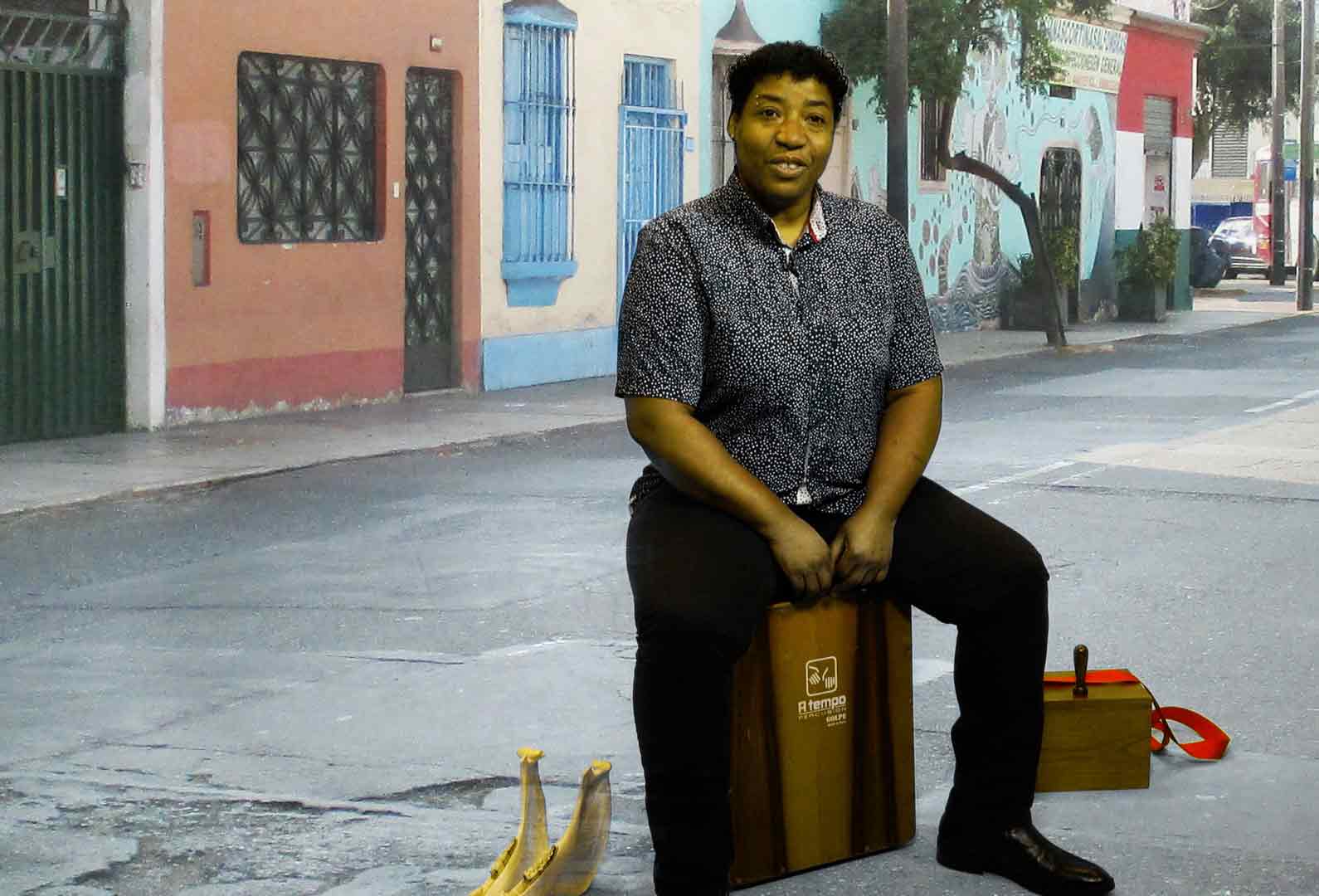
Peta Robles on her cajón
Peta Robles, star of the Afro-Peruvian episode, is a prize-winning cajonera from Lima who comes from a family of percussionists: her uncle, the recently-deceased Lalo Izquierdo, represented Peru in the Olympic Games in Mexico City; her sister Kata Robles Izquierdo, performed in the Smithsonian Folkways productions in Washington, D.C.; and so forth.
The instruments Peta plays, developed by the Afro-Peruvian community over several centuries, are living proof of the triumph of the human spirit, created by a community which literally had nothing.
Peta herself moved from her native Peru to California in the 1990s where she teaches and performs, primarily in the San Francisco Bay Area. One of the first women to play the cajón professionally (it used to be purely for the men), one of her goals in life is to make the world aware of her culture.
Katherine Kunhiraman
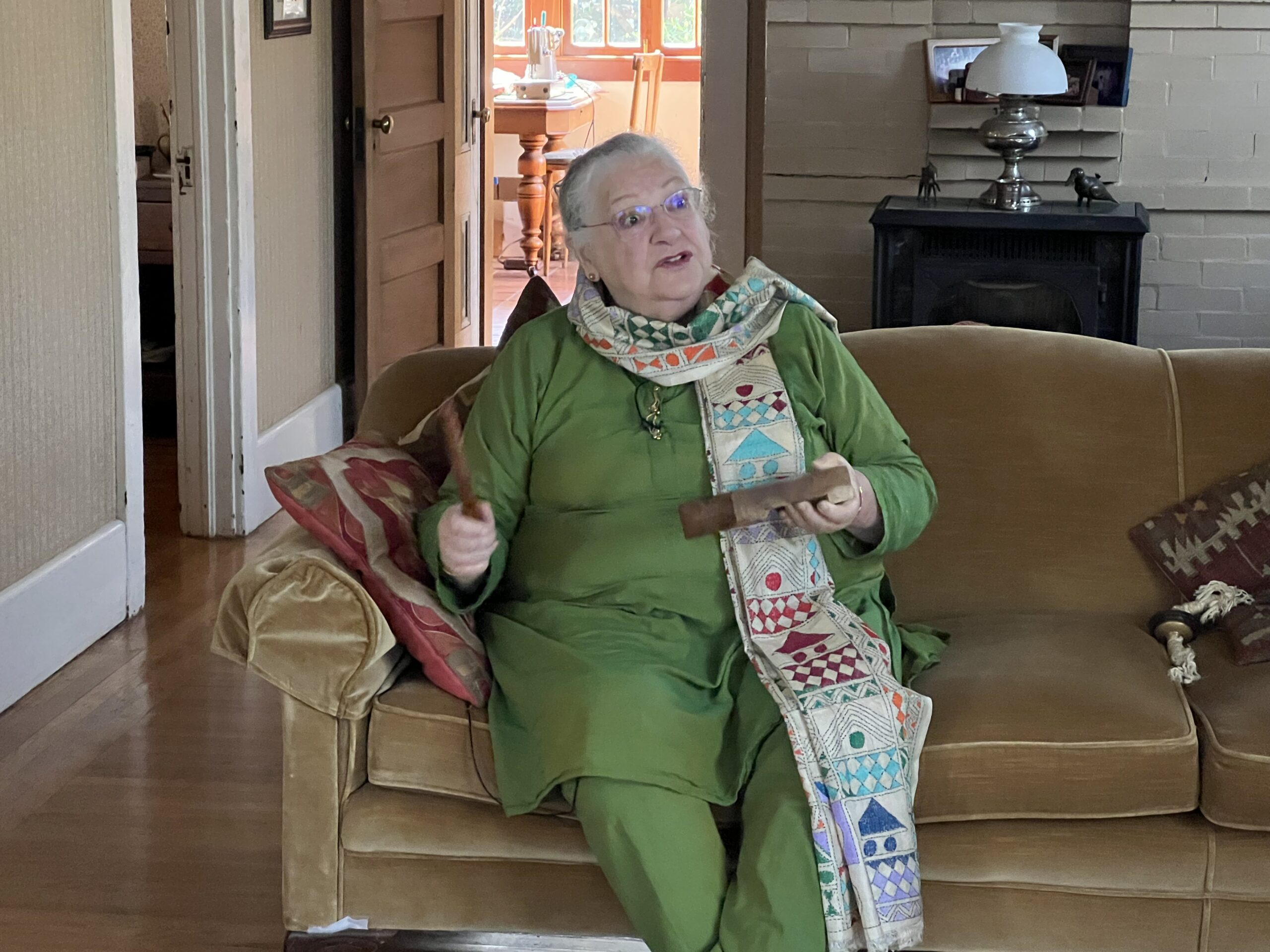
Katherine Kunhiraman explaining
Katherine Kunhiraman,….
MORE
AND MORE
AND ALSO
Lalo Izquierdo
The recently deceased (2022) Lalo Izquierdo is an expert informant about the history and culture of Afro-Peruvians. He was a dancer, choreographer, percussionist and folklorist of his Afro-Peruvian community. He taught workshops in many countries of South America and Europe, as well as In the United States, and represented his native Peru in the Olympic Games held In Mexico City.
In the last decade of his life, Izquierdo helped found and run a cultural organization in San Luis de Cañete in Perú called Asociación Cultural Afroperuana de San Luis de Cañete. There he taught the youth and helped keep alive his community’s traditions. He founded the organization on sound footing and it continues in operation today.
John Santos
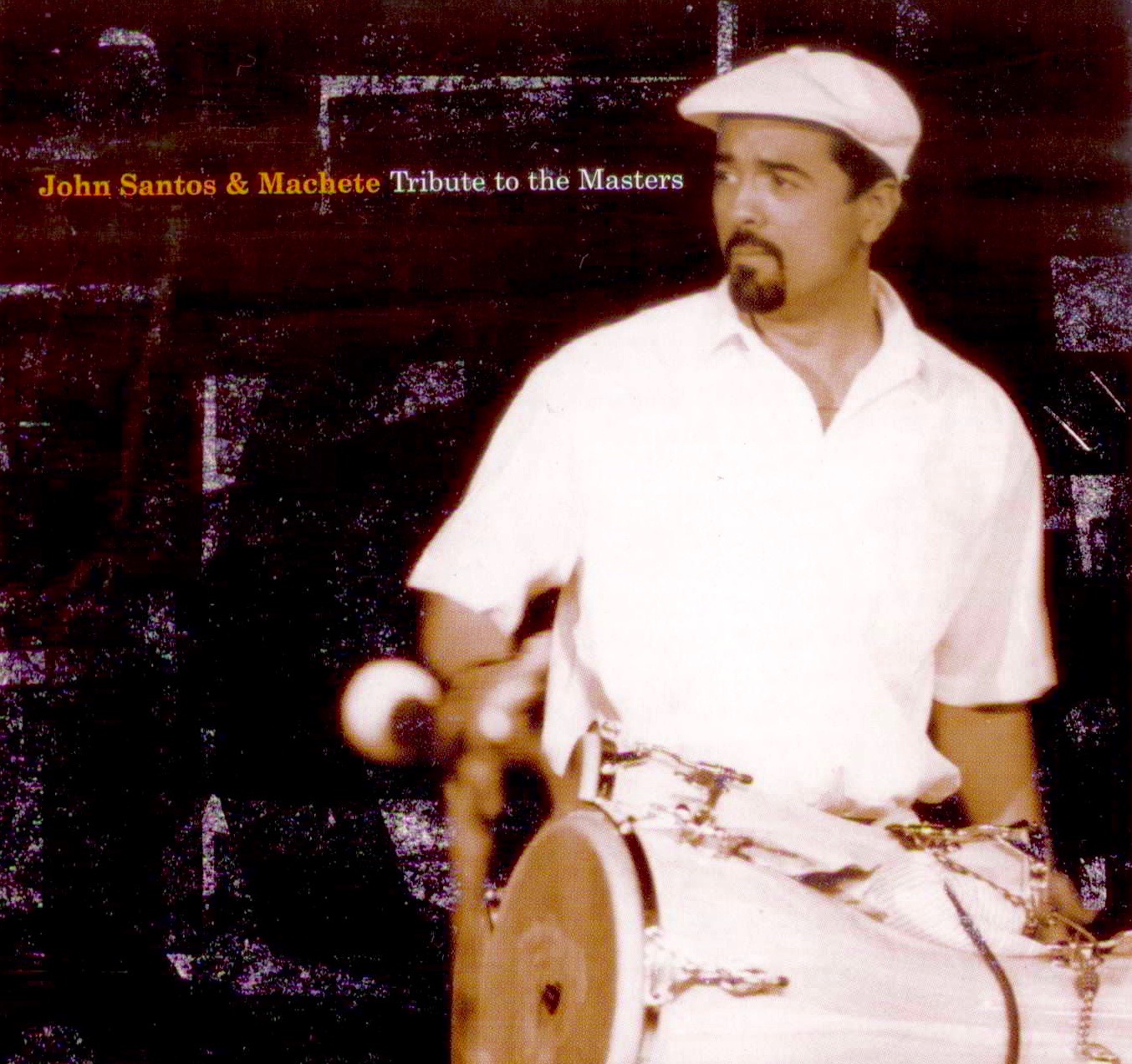
Seven-times Grammy nominee John Santos is also a USA Fentanels Fellow and has been a member of the Latin Jazz Advisory Committee for the prestigious Smithsonian Institute, the major national arts organization of the USA.
A percussionist with several albums and over 100 compositions to his name, he has played with most of the greats in Latin jazz. In addition to his broader musical skills, Santos is very knowledgeable about the history and use of drums in that music.
A key part of Santos’ roots are in Puerto Rico, and he honors the masters there both verbally and in his playing. Not surprisingly, his preferred musical style is Afro-Caribbean, but he is also familiar with Afro-Peruvian music and has promoted it in clubs in the San Francisco Bay Area, where he lives.
Huevito – Freddy “Huevito” Lobatón
Huevito – Freddy “Huevito” Lobatón is one of the foremost Afro-Peruvian percussionists living today. He’s a master cajonero and zapateador, and his rhythm and percussion skills – out of this world! Born and raised in Lima, Peru’s capital, he began playing at the age of four and became professional as a teenager, playing first with his brothers’ band then later, with some of Peru’s most famous performers.
In addition to his career in Peru, in which country he has won many prizes, for over 10 years he was part of the New York and world-touring group, Gabriel Alegría’s Afro-Peruvian Sextet. He has now returned to Peru where he continues to play.
Rameshbaba – Ramesh
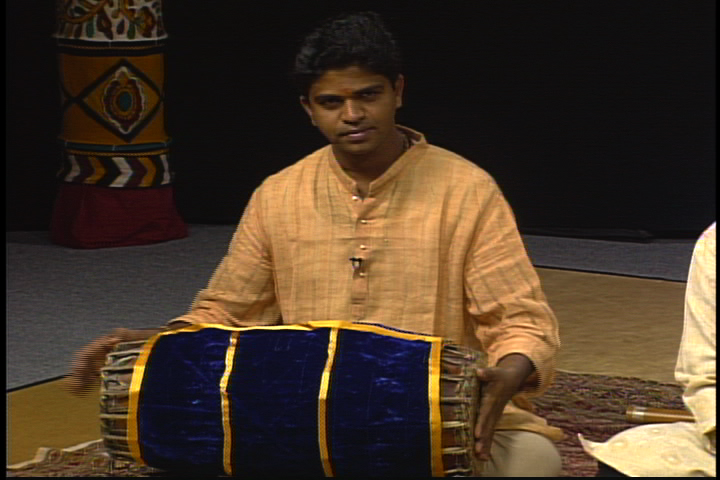
Rameshbaba with mridangam
Rameshbaba – Ramesh – is a highly skilled player of the mridangam and other drums of southern Indian classical music. ETC.